
Mental Health Awareness in the U.S.

Mental health has gained increasing attention in the United States, with efforts to reduce stigma and improve access to care. Conditions such as anxiety, depression, and stress are being addressed through therapy, medication, and support programs. Teletherapy has expanded access to mental health services, making it easier for individuals to seek help. Promoting mental well-being is essential for overall health.
Innovation in Medical Technology

Medical technology innovation is driving significant advancements in U.S. healthcare. From robotic surgery to wearable devices, technology is improving diagnosis and treatment. Robotic-assisted procedures offer greater precision and faster recovery times. Wearable devices enable continuous health monitoring. Biotechnology research is also leading to breakthroughs in treatments and therapies. Innovation continues to push the boundaries of what is possible in healthcare.
The Role of Preventive Healthcare

Preventive healthcare focuses on reducing the risk of disease through early detection and lifestyle interventions. In the United States, there is a growing emphasis on prevention as a means to improve population health. Routine screenings, vaccinations, and health education play a vital role in preventing chronic diseases such as diabetes and heart disease. Healthcare providers are encouraging patients to adopt healthier lifestyles, including balanced diets, regular exercise, and stress management. Preventive care not only improves health outcomes but also reduces long-term healthcare costs.
Digital Health Records and Data Integration

Electronic Health Records (EHRs) have revolutionized the way patient information is managed in the United States. These digital systems enable healthcare providers to access and share patient data efficiently. EHRs improve coordination of care by ensuring that all providers involved in a patient’s treatment have access to the same information. This reduces errors and enhances decision-making. However, interoperability remains a challenge, as different systems may not communicate seamlessly. Efforts are underway to standardize data formats and improve integration. Data security is another critical concern, requiring robust cybersecurity measures to protect sensitive patient information. Despite challenges, EHRs are a cornerstone of modern healthcare infrastructure.
Value-Based Care Transformation in the U.S.

The shift from fee-for-service to value-based care is one of the most significant transformations in the U.S. healthcare system. This model focuses on improving patient outcomes while reducing unnecessary costs. Under value-based care, providers are rewarded for delivering high-quality care rather than the quantity of services. This encourages preventive care, early intervention, and better coordination among healthcare teams. Healthcare organizations are investing in data analytics to track patient outcomes and measure performance. These insights enable providers to identify areas for improvement and implement evidence-based practices. However, transitioning to value-based care requires cultural and operational changes. Providers must adopt new technologies, redesign workflows, and collaborate more effectively across disciplines. Despite challenges, value-based care is paving the way for a more sustainable and patient-centered healthcare system.
Dr. Mehmet Oz – Bridging Medicine and Media

Dr. Mehmet Oz is a cardiothoracic surgeon who gained widespread recognition through his work in media. By combining medical expertise with communication skills, he has made healthcare information accessible to millions. Dr. Oz’s television appearances have focused on educating the public about health and wellness. He has covered topics ranging from heart health to nutrition and preventive care. While his media presence has been influential, it has also sparked discussions about the role of doctors in public communication. Nevertheless, his ability to engage audiences has brought attention to important health issues. In his medical career, Dr. Oz has performed complex heart surgeries and contributed to advancements in cardiac care. His clinical expertise remains a cornerstone of his professional identity. Dr. Oz’s approach highlights the importance of communication in healthcare. By reaching a broad audience, he has helped raise awareness about healthy lifestyles and disease prevention. His unique career path demonstrates how doctors can influence public health beyond traditional clinical settings.
Dr. Anthony Fauci – Leading Through Crisis

Dr. Anthony Fauci is one of the most recognized figures in American healthcare, particularly for his leadership during public health crises. As an immunologist, he has spent decades researching infectious diseases and advising government leaders. Dr. Fauci played a central role during the COVID-19 pandemic, providing guidance on prevention, treatment, and vaccination efforts. His expertise helped shape national and global responses to the crisis. Throughout his career, he has contributed to advancements in the treatment of diseases such as HIV/AIDS. His research has improved patient outcomes and influenced public health policies worldwide. Dr. Fauci is known for his commitment to science and evidence-based decision-making. He has consistently emphasized the importance of research and data in addressing health challenges. Despite facing challenges and criticism, he remained dedicated to his mission of protecting public health. His resilience and expertise have earned him widespread respect. Dr. Fauci’s legacy is defined by his contributions.
The Rise of Telemedicine in the United States

Telemedicine has rapidly emerged as one of the most transformative developments in the United States healthcare system. While the concept of remote healthcare has existed for years, its widespread adoption accelerated dramatically during the COVID-19 pandemic. Today, telemedicine is not just a temporary solution but a permanent and essential component of modern healthcare delivery. At its core, telemedicine enables patients to consult with healthcare providers remotely using digital communication tools such as video calls, mobile apps, and online platforms. This innovation has significantly improved access to care, particularly for individuals living in rural or underserved areas where medical facilities may be limited. Patients no longer need to travel long distances or wait for extended periods to receive medical advice. One of the primary advantages of telemedicine is convenience. Patients can schedule appointments more flexibly and receive care from the comfort of their homes. This is especially beneficial for individuals with mobility issues, chronic conditions, or busy schedules. For healthcare providers, telemedicine allows for more efficient patient management and the ability to reach a larger population. The integration of telemedicine with remote patient monitoring devices has further enhanced its effectiveness. Wearable technologies and home-based diagnostic tools enable continuous tracking of vital signs such as heart rate, blood pressure, and glucose levels. This real-time data allows healthcare professionals to make informed decisions and intervene early when necessary, ultimately improving patient outcomes. Another key benefit of telemedicine is its role in reducing healthcare costs. By minimizing the need for in-person visits, hospital admissions, and emergency room usage, telemedicine contributes to overall cost savings for both patients and healthcare systems. Additionally, it helps optimize resource utilization, allowing hospitals to focus on critical cases that require physical presence. Despite its many advantages, telemedicine also faces certain challenges. One major concern is the digital divide, as not all patients have access to reliable internet connections or the necessary technology. This can create disparities in healthcare access, particularly among low-income or elderly populations. Healthcare leaders are working to address these issues by expanding digital infrastructure and offering user-friendly platforms. Privacy and data security are also critical considerations in telemedicine. Ensuring the confidentiality of patient information is essential, and healthcare providers must comply with strict regulations such as the Health Insurance Portability and Accountability Act (HIPAA). Advances in cybersecurity are helping to mitigate these risks and build trust among users. Regulatory changes have played a significant role in the growth of telemedicine. During the pandemic, many restrictions were temporarily lifted, allowing for greater flexibility in virtual care delivery. As a result, policymakers are now evaluating how to make these changes permanent while maintaining quality and safety standards. Looking ahead, telemedicine is expected to continue evolving with advancements in artificial intelligence, machine learning, and digital health platforms. These technologies will further enhance diagnostic accuracy, personalize treatment plans, and improve patient engagement. In conclusion, telemedicine has revolutionized healthcare in the United States by making it more accessible, efficient, and patient-centered. While challenges remain, ongoing innovation and policy support are likely to solidify its role as a cornerstone of the future healthcare system.
The Evolution of Healthcare Leadership in the United States

The healthcare system in the United States has undergone a profound transformation over the past few decades, driven by technological advancements, policy reforms, and a growing emphasis on patient-centered care. At the core of this evolution are healthcare leaders who continuously adapt to complex challenges while striving to improve outcomes, reduce costs, and enhance accessibility. Traditionally, healthcare leadership was largely administrative, focused on managing hospital operations, staffing, and compliance. However, modern healthcare leaders are expected to be visionaries who can integrate innovation into everyday practices. With the rise of digital health technologies such as electronic health records (EHRs), artificial intelligence (AI), and telemedicine, leaders must possess both clinical understanding and technological insight. One of the most significant shifts in U.S. healthcare leadership is the adoption of value-based care. Unlike the traditional fee-for-service model, value-based care emphasizes patient outcomes rather than the volume of services provided. This shift requires leaders to rethink care delivery models, improve coordination among providers, and invest in preventive care strategies. As a result, healthcare executives are increasingly focusing on data-driven decision-making to track performance and identify areas for improvement. Another critical aspect of modern healthcare leadership is workforce management. The COVID-19 pandemic highlighted the importance of supporting healthcare professionals, addressing burnout, and ensuring workforce resilience. Leaders are now prioritizing employee well-being, professional development, and creating a culture of collaboration. Strong leadership in this area not only improves staff satisfaction but also directly impacts patient care quality. Diversity, equity, and inclusion (DEI) have also become central to healthcare leadership in the United States. Leaders are working to address disparities in healthcare access and outcomes among different populations. By promoting inclusive policies and culturally competent care, healthcare organizations aim to build trust within communities and ensure equitable treatment for all patients. Furthermore, healthcare leaders are increasingly collaborating with external stakeholders, including government agencies, technology companies, and community organizations. These partnerships enable the development of innovative solutions to complex healthcare challenges, such as expanding access to rural areas and improving chronic disease management. Financial sustainability remains a key concern for healthcare organizations. Rising costs, regulatory changes, and reimbursement pressures require leaders to be strategic in resource allocation. Effective leaders balance financial performance with the mission of delivering high-quality patient care. Looking ahead, the role of healthcare leaders will continue to evolve as new challenges and opportunities emerge. Advances in genomics, personalized medicine, and digital health will further transform the industry. Leaders who embrace innovation, prioritize patient-centered care, and foster resilient organizations will be best positioned to succeed in this dynamic environment. In conclusion, healthcare leadership in the United States is no longer confined to administrative functions. It is a multifaceted role that demands strategic thinking, technological expertise, and a deep commitment to improving patient outcomes. As the healthcare landscape continues to change, strong leadership will remain essential in shaping the future of care.
The Medical Advisor Guiding Strategic Healthcare Decisions 2026
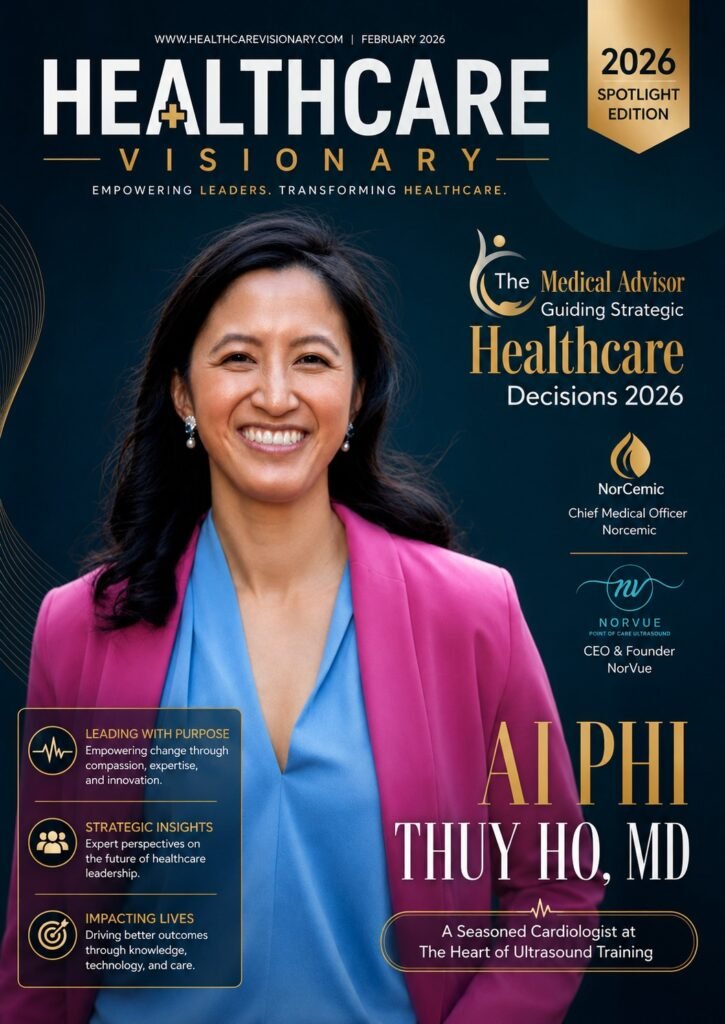
Home The Magazine The Medical Advisor Guiding Strategic Healthcare Decisions 2026 Explore the current edition and the people, ideas, and innovations shaping the future of healthcare. Guiding Strategic Healthcare Decisions Through Vision and Innovation Leadership, Expertise, and Compassion Shaping the Future of Medicine The February 2026 Spotlight Edition of Healthcare Visionary proudly features Ai Phi Thuy Ho, MD, a distinguished cardiologist, medical advisor, and healthcare innovator whose leadership continues to influence the future of patient care, clinical excellence, and medical education. Recognized for her expertise in cardiovascular medicine and her commitment to advancing ultrasound training and diagnostic excellence, Dr. Ho represents a new generation of healthcare leaders who combine clinical expertise with strategic vision to improve outcomes and empower healthcare professionals worldwide. Inside This Exclusive Edition Leading with PurposeDiscover how visionary healthcare leaders are creating meaningful change through compassion, innovation, and a relentless commitment to excellence. Strategic Insights for Healthcare LeadershipExplore expert perspectives on emerging trends, leadership strategies, and the future of healthcare decision-making in an increasingly complex world. Innovation at the Heart of MedicineLearn how advancements in diagnostics, imaging, and technology are revolutionizing patient care and improving clinical outcomes. Impacting Lives Through Knowledge and CareCelebrate the professionals and organizations using education, technology, and collaboration to transform healthcare delivery across the globe. Feature Story Ai Phi Thuy Ho, MD: A Seasoned Cardiologist at the Heart of Ultrasound Training With a passion for education and innovation, Dr. Ho has dedicated her career to enhancing medical training and empowering healthcare providers with the knowledge and tools needed to deliver exceptional patient care. Her work stands as a testament to the power of leadership, expertise, and purpose-driven healthcare. Related Stories skip render: ucaddon_post_carousel